
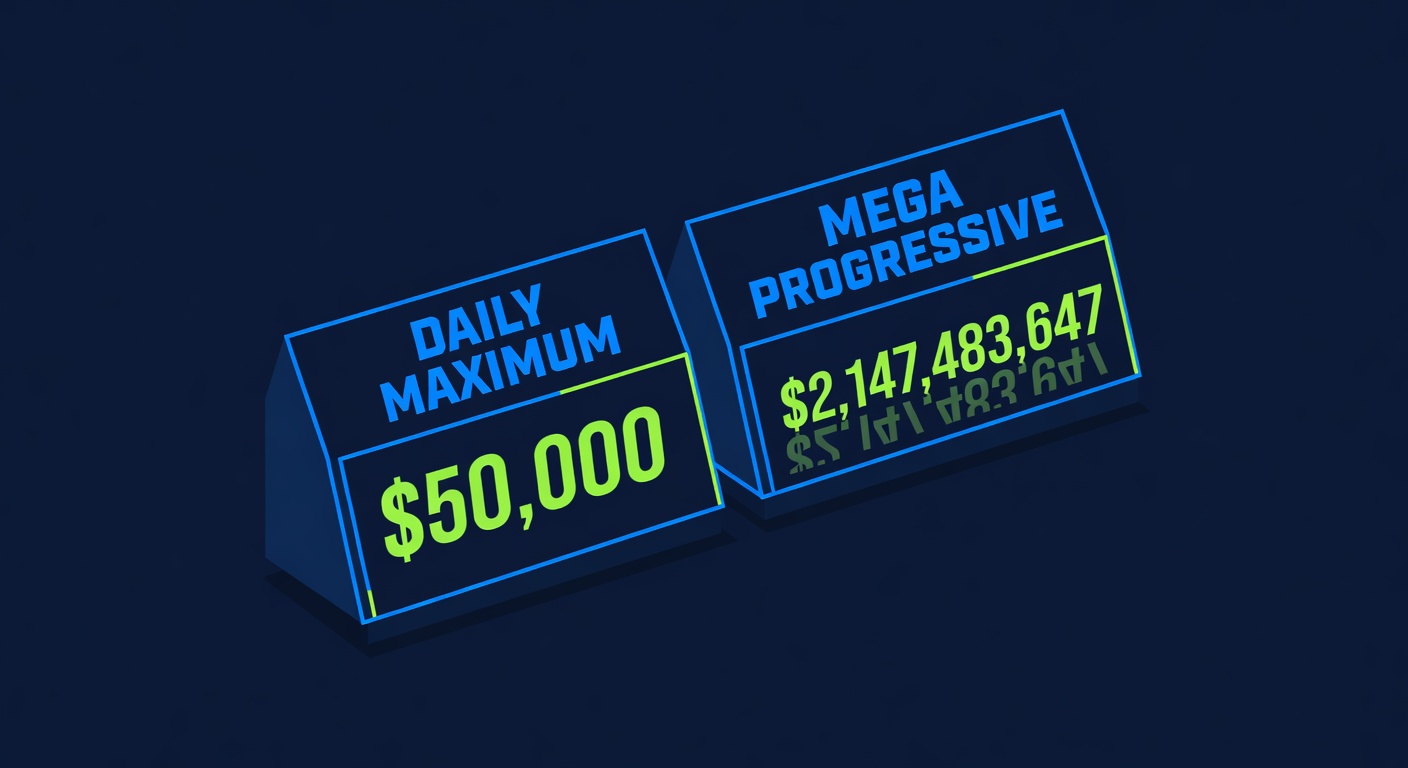
In 1987, I watched a machine pay $47,000 to a retiree from Reno. She'd fed the machine ninety-eight dollars. In 2003, I watched the same class of machine (Blazing Sevens, Bally manufactured) never pay more than $1,200 despite feeding it thousands per day in total volume across a bank of forty units.
The difference wasn't luck. It was mathematics. And understanding that difference is the key to why daily jackpots and mega jackpots are different games wearing the same skin.
The Architecture
Daily jackpots pool from multiple machines. A set of twenty, thirty, sometimes fifty slot machines feeds a central meter. Every pull contributes a small percentage to the pool. When someone hits the jackpot, they get the amount shown on the meter. The meter resets. Contributions start accumulating again.
Mega jackpots work similarly, except the pool feeds across multiple casinos, sometimes multiple properties owned by the same operator. Stake's Mega Moolah, for instance, pools across the entire Stake platform globally. Pragmatic Play's progressive pools feed their entire Jackpot network.
The payout mechanics are identical: a small percentage from each wager feeds the pot. When it pays, the winner takes the pot. The meter resets.
What's different is the implied payout frequency and the effective RTP (return to player).
A daily jackpot on a bank of twenty machines might hit every three to fourteen days.
Daily Jackpots: Smaller, More Frequent
A daily jackpot on a bank of twenty machines might hit every three to fourteen days. The average size is $4,000 to $8,000. Because the pool size is small and contributes are concentrated (only this bank feeds the meter), the meter climbs quickly.
This means the expected payout is more visible and more frequent. A player seated at that bank has a reasonable statistical chance of witnessing a hit within their session.
The casino loves daily jackpots because they create urgency. A player knows the meter is at $6,200 right now. If the pot hasn't hit in two days, maybe it's "due." That's irrational (the game has no memory), but it drives action.
For the operator, daily jackpots keep players coming back. They hit often enough to be real, but small enough that they don't cannibalize the casino's win.
Mega Jackpots: Larger, Vastly Rarer
Mega Moolah, which pools globally, has hit progressive pots exceeding $20 million. The last documented hit was in October 2023: $22.4 million. The time between hits at that level: eighteen months to seven years, depending on total volume.
What this means: the expected value of hitting the mega pot is negligible. You will never hit it. The house calculates that into the RTP. The game's base RTP might be 88%, meaning twelve percent of all money wagered on Mega Moolah feeds the system (eight percent to the house, four percent to the progressive). That four percent might accumulate for three years before paying out once.
The psychological effect: a mega jackpot winner feels improbable, miraculous, almost unearned. A daily jackpot winner feels lucky, but not impossible.
This is why operators love mega jackpots. The payout rate on the base game is worse (lower RTP) to feed the progressive. Players accept this because the potential payout is absurd. Fifty million dollars.
RTP on a typical daily jackpot slot: 94 to 96% (because the small jackpot is paid more frequently, it's factored into a reasonable expected return).
The Numbers
RTP on a typical daily jackpot slot: 94 to 96% (because the small jackpot is paid more frequently, it's factored into a reasonable expected return).
RTP on a mega progressive: 85 to 91% (the base game is gutted to feed the pot).
Over a thousand hands, a daily jackpot player loses approximately $40 to $60 per hundred wagered. A mega jackpot player loses approximately $90 to $150 per hundred wagered.
The cost of the dream.
The Honest Verdict
If you're going to gamble on slots, daily jackpots are marginally less bad because the expected loss is lower. The jackpots hit frequently enough to be real. You might witness one.
Mega jackpots are a transfer of wealth from millions of players to one or two per year. The house guts the base game. The players accept this because the story of someone winning 22 million is more compelling than the story of someone winning eight thousand.
I've watched both. The retiree who won $47,000 on Blazing Sevens in 1987? She used the money to buy a house. The mega jackpot winners I've seen? A percentage of them give it away or lose it within five years. The scale of the number breaks their ability to manage it.