
Egyptian Slots: Why Pharaohs Never Die
For forty years, Egyptian slots have dominated casino floors. The theme never changes. Neither do the players.
Words by Dean Whitaker4 min read
I watched a woman play Book of Ra for four hours straight at a London casino in 2003. She had a system: bet 50 pence, spin, if you got one expanding symbol, keep betting. If you got nothing for five spins, move to Book of Aztec. She had been coming to this casino every Thursday for eight years. Same game, same bet.
When I asked why Egyptian slots instead of, say, pharaohs' gold or sphinx myths, she said: "You know the book. You know how it pays. Everything else is the same game with different colors."
She was right, and her consistency was the entire point.
The Book Mechanic
Egyptian slots universally use a "book" mechanic: a scatter (wild symbol) that can expand and cover entire reels. The narrative is wrapped around a mystery book (Book of Ra, Book of Aztec, Book of Dead, the variations are infinite). Land the book on the right reel, and it expands. Suddenly you have a winning combination where you didn't expect one.
The mechanic is not unique to Egyptian slots. But the theme makes it coherent. A book in an Egyptian setting makes sense. A book in a space-themed game does not. The theme and the mechanic are so intertwined that players abstract them together: Egyptian equals book equals wild expansion.
Aristocrat, the company that dominates the Australian slots market (where Egyptian themes are licensed heavily), understands this. They release Book of Ra, then Book of Ra Deluxe, then Book of Ra Deluxe Multi-Level, then Book of Ra Deluxe Gamble. Same game, same mechanic, same Egyptian theme, slight variations in payout and volatility.
A player who likes the Book mechanic does not need to learn a new game. They need to recognize the theme and they are home.
Egyptian themes trigger specific associations: ancient civilizations, gold, mysteries, treasure.
Why Not Something Else?
Why Egyptian and not, say, space aliens or jungle animals? The answer is embedded in gambling psychology and casino architecture.
Egyptian themes trigger specific associations: ancient civilizations, gold, mysteries, treasure. These are aspirational without being morally questionable. A casino can market "golden pharaohs" without implying anything harmful. A jungle animal theme might have racist connotations (however unintended). A modern theme (Office, School) might hit too close to home for people trying to escape ordinary life.
Egyptian themes occupy a sweet spot: distant enough to be fantasy, exotic enough to be aspirational, neutral enough to be uncontroversial.
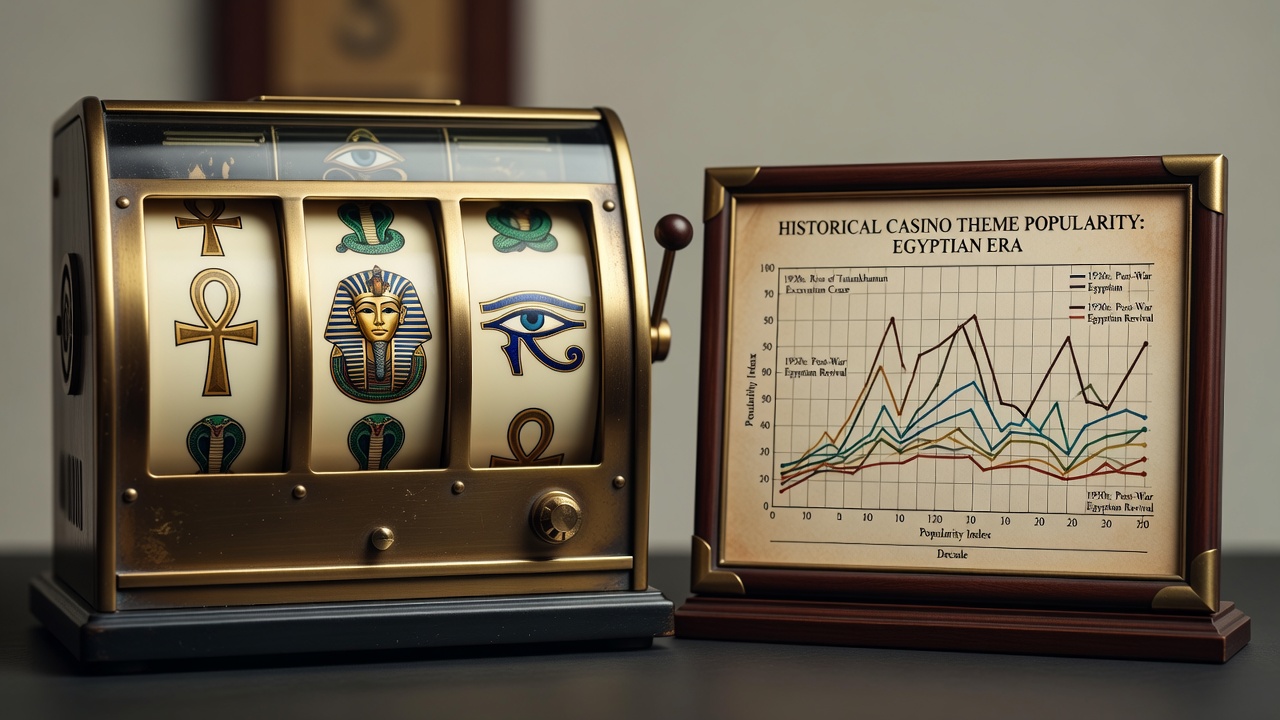
There is also the historical accident: Aristocrat released Book of Ra in the 1990s and it became a phenomenon. By 2000, Egyptian slots accounted for 15 to 20 percent of all slots in European casinos. New games were released to compete. They all adopted the Egyptian aesthetic because the Egyptian aesthetic was proven to work.
The Ritual Element
A player who has played Book of Ra for eight years is not playing Book of Ra anymore. They are performing a ritual. The specific symbols matter less than the repetition. The wheel spins the same way. The payout sounds are identical. The rhythm is established.
When Aristocrat released Book of Ra Deluxe, which has the same mechanic but slightly faster gameplay, long-term players complained that "the game feels wrong." They did not complain about payout rates. They complained about the rhythm being off.
This is not specific to Egyptian slots. It is specific to habitual gambling. A player who has wagered 50,000 pounds on a single slot wants to keep wagering on that slot because the slot is familiar. Switching to a new game (even a mathematically better game) requires relearning the rhythm, the sound effects, the button placement.
The Egyptian theme does not create this ritual. But it serves as a flag that marks: this is the game you know.
Casinos love Egyptian slots because the theme transcends geographic boundaries.
The Operator Incentive
Casinos love Egyptian slots because the theme transcends geographic boundaries. A player in London plays Book of Ra. A player in Berlin plays Book of Ra. A player in Singapore plays Book of Ra. The theme works across cultures (Egypt is universal in Western imagination as "ancient and mystical").
Software companies like Pragmatic Play and Microgaming can release a single game and market it globally without translation or localization. The Egyptian theme is the universal theme.
Why not release a new Egyptian slot every year? Because theme novelty matters, but mechanic familiarity matters more. A player will try a new Egyptian slot based on the theme. They will stay if the mechanic (the book wild, the expanding symbols, the scatter pays) is recognizable.
After forty years and hundreds of Egyptian slots, the theme is now a code. Every slot player globally recognizes it. The theme does not need to be new. It needs to be consistent.
The End of the Pharaohs
Egyptian slots will not die. They are too entrenched. But their dominance is slowly shrinking, displaced by Asian themes (dragons, lucky cats, jade) and celebrity-licensed themes (Netflix shows, musicians). The percentage of floor space devoted to Egyptian slots has dropped from 20 percent in 2010 to 12 percent in 2023 in major European casinos.
But players like the woman I watched will keep coming back. Not because the game is optimal. Because she knows exactly what will happen, and knowing is better than winning.