
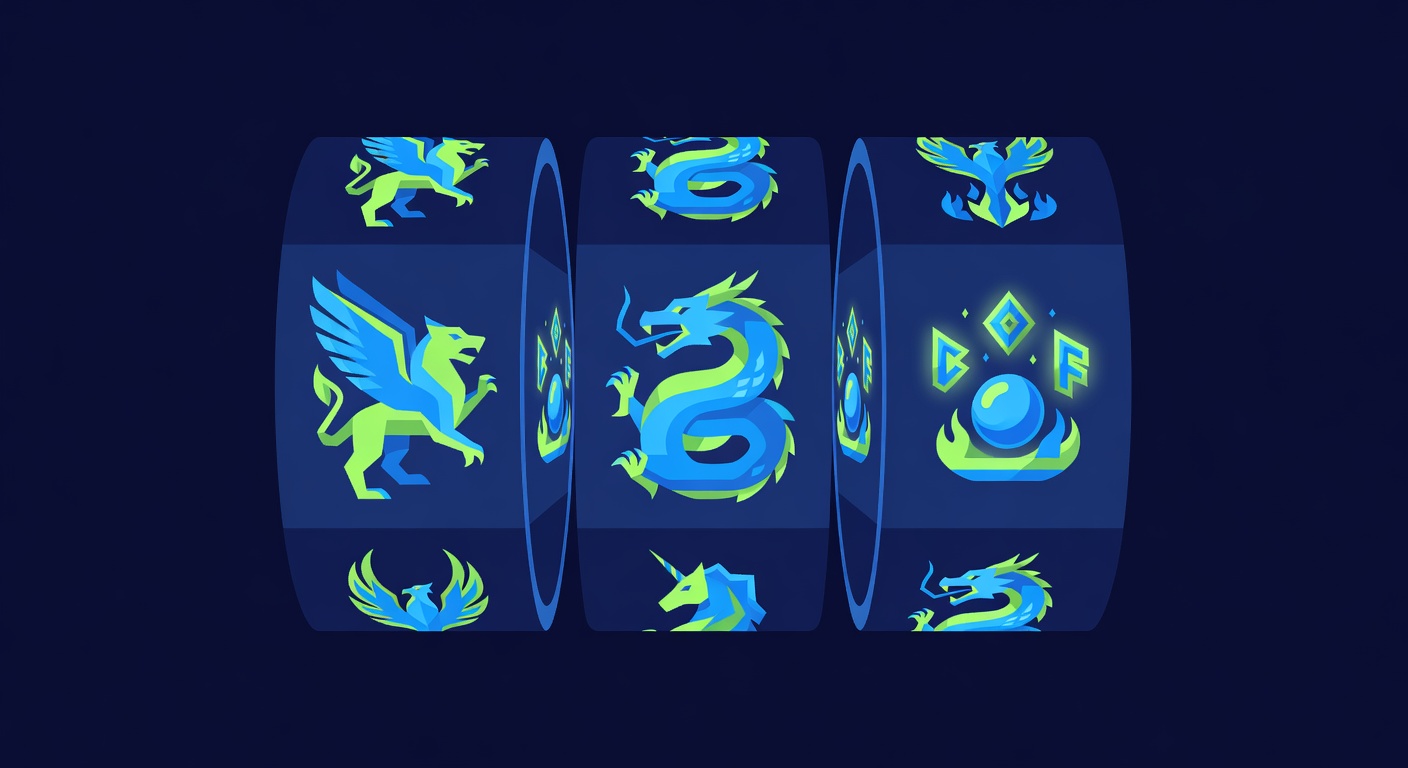
The fantasy slot machine is the perfect metaphor for modern online gambling, a fever dream of good versus evil, swords and sorcery, all wrapped around a core of mathematical certainty. You are watching a dragon hoard treasure while a machine systematically empties your bank account. It is grotesquely beautiful.
Take Kingdoms Rise, made by Playtech. The game opens on a kingdom in chaos, castles burning, shields cracking under assault. A wizard appears, offering to save the kingdom if you will fund his magic. You pay 1 credit, you watch the wizard work, the kingdom survives or crumbles, and the machine tells you whether you have won.
That is the entire game. Watch the narrative, make no decisions, accept the outcome. And the narrative is so visually loud, so aurally insistent, that you forget you are simply watching a random number generator spit out outcomes.
The Wild West of Mythology
Game designers raid world mythology for assets. There is a Gorilla Kingdom slot. A Vikings slot. A Wizard of Oz licensed slot. A medieval fantasy slot called Excalibur. A Chinese mythology slot called Dynasty. They are not making games around a theme; they are making slots that wear the skin of a narrative.
The genius is that mythology is pre-loaded in your brain. You already know what a dragon is, what it means, what it wants. The designer does not have to explain it. They just have to show the dragon and your brain does the narrative work.
When you see a dragon in Kingdoms Rise, your brain is instantly engaged in a fantasy context. You are not thinking about expected value or house edge. You are thinking about the story of the wizard and the dragon and the kingdom. The slot has hijacked your narrative-reading brain.
The bonus is framed as a quest: you are searching for treasure in a dungeon or a castle.
The Bonus as Quest
Fantasy slots structure their bonus games as quests. Collect three scatter symbols and you enter the "bonus round." The bonus round is a mini-game where you pick items off the screen (chests, doors, crystal balls) and each one reveals a prize.
The bonus is framed as a quest: you are searching for treasure in a dungeon or a castle. Each pick feels like agency, like you are choosing your path. But the outcome was predetermined when the bonus triggered. You are simply revealing a path that was already laid out.
This is genius game design. It converts a pure RNG game (outcome completely random) into a narrative experience where the player believes they have influence.
The Cascading Reels as Magic
Some fantasy slots have "cascading reels." When you win, the winning symbols explode. New symbols fall from above to fill the gaps. If the new symbols create a win, they explode too. This cascading continues until no more wins are created.
Narrative-wise, this is magic happening. The reels are doing something, something is shifting, something is transforming. Mechanically, it is just the RNG running multiple times, but each cascade feels like the game is actively helping you.
The Mathematics Hide Under Purple Lighting
This is the critical misunderstanding. A fantasy slot with dragons and wizards is not a different kind of game than a slot with geometric symbols. The RNG runs the exact same way. The house edge is typically 4 to 6 percent. The probability of hitting the bonus is the same.
What is different is the psychological wrapping. The fantasy skin makes the game feel less like pure gambling and more like a narrative experience. The player is not gambling; the player is exploring a wizard's tower.
The house knows this. Slots with licensed intellectual property (Game of Thrones slots, for example) charge more to use the license. But the underlying game is identical to any other high-variance slot. The license just makes it feel different.
The Endgame Trap
Fantasy slots are particularly effective at extending play sessions. A player loses their initial bankroll, but the narrative hook (the dragon is still in the castle, the wizard still needs help) keeps them playing. They buy more credits. The narrative draws them deeper.
This is not a flaw in the game design. It is the point. The game designer's job is to keep the player playing. Fantasy elements are highly effective at doing this.
The Regulatory Status
Fantasy slots are completely legal in regulated jurisdictions. The Malta Gaming Authority permits them. The UK Gambling Commission permits them. They must still be certified for RTP, still be tested for fairness, still show the mathematical house edge. The fantasy wrapping does not change the regulatory requirements.
But the regulatory framework assumes the player understands the game is probabilistic. A player who thinks they have a chance to save the kingdom through skill or through luck based on a narrative arc might not understand that the outcome is a pure RNG event.
The Addiction Element
Psychologists have noted that games with strong narratives create stronger engagement than games without narratives. A simple geometric slot is easier to quit than a fantasy slot with a story.
This is one reason why problem gambling clinicians are concerned about modern slot design. The narrative elements are not incidental; they are load-bearing components of the engagement architecture.
The Prediction
Fantasy slots will continue to evolve. The narratives will become more complex. The cascading reels and bonus games will become more sophisticated. The house edge will remain constant, but the psychological sophistication will increase.
In ten years, a fantasy slot might involve an entire story arc. You start the game weak, build power through wins, face a boss, defeat it. The entire structure is narrative, with the RNG running underneath, invisible.
It will be gambling wrapped so thoroughly in narrative that players will forget what they are actually doing. And the house edge will remain at 4 to 6 percent, unchanged.