
The modern online slot is a marvel of deception. It appears to be a mechanical device, a digital recreation of the one-armed bandit that populated British amusement arcades in the 1970s. It is, in fact, an algorithm optimised for extracting money at predictable rates.
The Mechanical Illusion
When you play an online slot, you see spinning reels. The visual is meant to evoke the physical machine: three metal drums rotating inside a cabinet, slowing down, stopping on symbols. This imagery is comforting. It suggests that something mechanical, something bound by the laws of physics, is determining your fate.
It is not. The reels are a graphic overlay. The moment you click "spin," the outcome has already been decided by the RNG (Random Number Generator). The spinning animation is pure theatre. The reels slow down and stop on the predetermined outcome. The illusion of mechanical randomness masks algorithmic determinism.
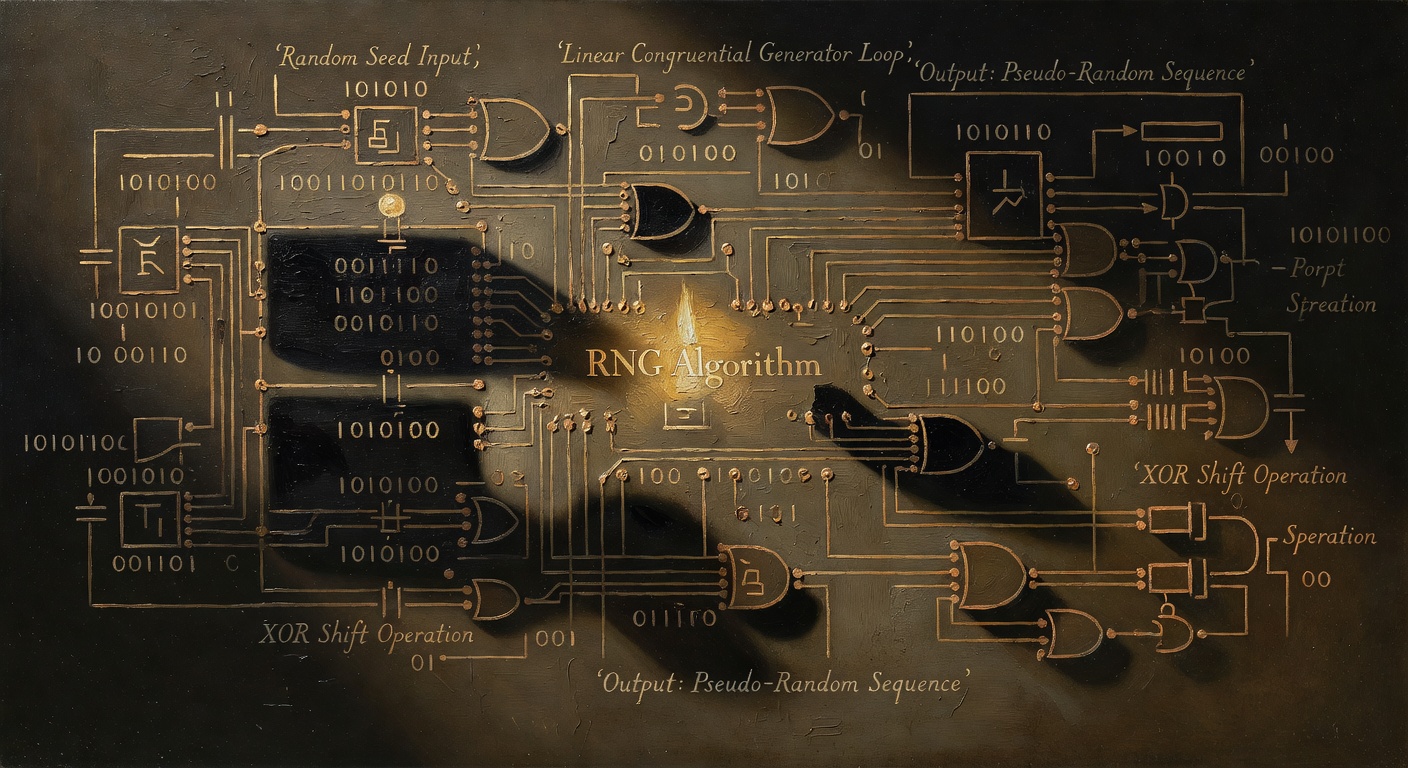
The RNG is a mathematical function that generates numbers at extraordinary speed.
The RNG Process
The RNG is a mathematical function that generates numbers at extraordinary speed. Thousands per second. It is like an invisible hand constantly rolling dice. The casino's server does this perpetually. When you place a bet and click "spin," the server captures one number from this infinite stream. That number maps to a game outcome (reel positions, win or loss).
This happens in milliseconds. But the animation stretches it out. The reels spin for two seconds, creating the impression of chance unfolding in real time. In reality, the dice were already rolled before the animation began.
The RTP: What It Means and What It Does Not
Every online slot displays an RTP percentage. RTP is Return to Player. It is usually between 92 and 98 percent for online slots. This number represents the long-term average payout rate over millions of spins.
If a slot has an RTP of 96 percent, the mathematics say that over 1 million spins, the total payouts will average 96 percent of the total wagered. The house takes 4 percent. This is the house edge.
What the RTP does not mean is that you will see a 96 percent return in any reasonable timeframe. A player spinning 100 times will not lose 4 units. They might lose 30. They might win 50. Variance is the word used for this unpredictability. In the short term, the slot is chaotic. In the long term, over millions of spins, the RTP holds true.
If a slot has an RTP of 96 percent, the mathematics say that over 1 million spins, the total payouts will average 96 percent of the total wagered.
The Paytable and the Lie It Tells
The paytable is the schedule of payouts. Match three sevens: receive 100 coins. Match three cherries: receive 10 coins. Match three bars: receive 50 coins. The paytable appears transparent. Play this game and understand your odds.
But the paytable obscures the actual odds through omission. It does not tell you the probability of each outcome. It does not tell you that three sevens might have a 1 in 10,000 probability and three cherries a 1 in 50 probability. The paytable shows you the reward but hides the likelihood. It is mathematical marketing.
Volatility and the Illusion of Patterns
Slots have different volatility levels. High volatility means big wins separated by long dry spells. Low volatility means smaller, more frequent wins. The choice of volatility is not neutral. It changes which players stay at the machine.
A high-volatility slot is designed to entrap the optimist. You lose ten spins, then hit a win for 50 coins. Your brain remembers the 50-coin win and forgets the nine losses. You have lost 30 total but you feel like you are up. This is what casinos call "perceived value." The player feels closer to winning than they actually are.
Low-volatility slots are designed to keep the casual player playing longer. Frequent small wins create a sense of momentum. You do not feel like you are losing because you are always getting something back.
The Bonus Games and the Secondary Trap
Many slots have bonus rounds. Land three scatter symbols and you enter the bonus game. The bonus game typically involves picking items on a screen (each item hides a prize) or spinning a wheel. These bonus games feel like skill elements. You are actively choosing. You are participating.
You are not. The bonus outcome was decided the moment the bonus triggered. The RNG generated a number that maps to a bonus prize. You pick items on the screen, but the picks are predetermined to land on that prize. The picking creates the illusion of agency. It makes the loss feel less like bad luck and more like a choice you made.
Progressive Jackpots and the Collective Theft
Progressive jackpots are seductive because they grow visibly. Every wager across all casinos offering the game contributes a percentage to the jackpot. You watch the total climb. 100,000 pounds, 250,000 pounds, 1 million pounds. The impossibility of the jackpot makes it irresistible.
The mathematics favour the house more in progressive games. The RTP is often lower (92 percent instead of 96 percent) because a larger percentage is diverted to the jackpot pool. The player is contributing to everyone else's potential win while making their own losing position worse.
The Regulatory Truth
All of this is legal and certified. In the United Kingdom, online slots are tested by independent laboratories (GLI, eCOGRA, and others). They verify that the RNG is truly random and that the RTP matches what is advertised. The deception is not technical; it is perceptual.
The reels spinning, the paytable obscuring odds, the bonus games creating false agency, the progressive jackpots climbing hypnotically. All perfectly legal. All designed to make you play longer than you would if you knew the game was decided before the spinning started.
The slot is not broken. It is working exactly as intended.