
Jackpot Formats Compared: Progressive, Must-Drop and More
A breakdown of six jackpot structures pulled from the spotlight data, showing exactly how each meter grows and when it can pay.
Words by Buddy Grant4 min read
Networked progressives pull a small cut from every bet across dozens of sites or casinos into one shared meter.
Networked Progressive
A single top prize is pooled across many machines, often the same game spread over dozens or hundreds of casinos or sites. A tiny slice of every bet placed anywhere on the network feeds one shared meter, which is why these totals can climb into the millions before someone hits. Because the pool is shared by a huge player base, the chance of any one spin triggering the grand prize is astronomically small, routinely on the order of tens of millions to one. The advertised size comes from the crowd, not from better personal odds. Think of the well-known cross-casino progressive networks where the same branded game links every venue into one giant meter.
Standalone Progressive
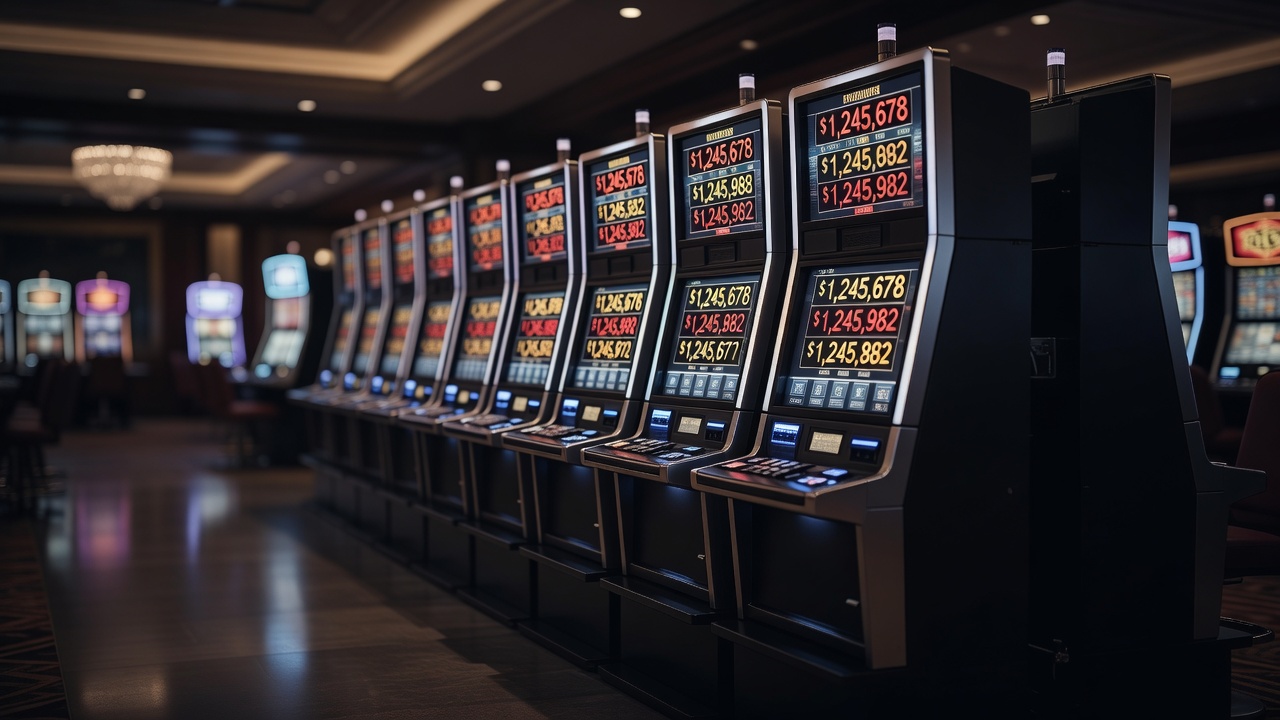
The jackpot builds only from bets made on that one specific machine or game. It is not linked to any other unit. A percentage of each wager on that game raises its own meter until it is won, then it resets to a seed amount. Totals grow more slowly and top out far lower than networked pools, but the hit frequency is still governed by long odds set in the game math. A smaller number on the sign does not mean it is close to paying. A single cabinet on the floor showing its own rising meter, unconnected to the machine beside it, illustrates this setup.
Local In-House Progressive
A prize pooled across a group of machines within one casino or one operator only. A bank of linked cabinets or the same game across a single brand's sites. Contributions come from that limited internal network rather than a global one. The pool sits between standalone and networked in size, and the odds still favor the house over the long run. A mid-sized local jackpot is not more winnable. It simply draws from a smaller crowd. A linked bank of a few machines in one venue sharing a house meter above them shows how this works.
Fixed Flat Jackpot
The top prize is a set amount that never grows. For example a fixed multiple of your bet awarded for landing the top combination. It pays the same whether it was hit yesterday or has not landed in weeks. The payout is capped by design and already priced into the game's return-to-player. Chasing a flat jackpot offers no rising reward for waiting, and the trigger odds remain fixed and long on every spin. A paytable listing a flat top award, such as a fixed coin value for five premium symbols on a line, fits this category.
Daily Must-Drop Jackpot
A jackpot guaranteed to be awarded before a countdown ends. For example must drop before midnight or before it reaches a ceiling amount. The game math nudges a winner as the deadline or cap approaches, so it always pays out within the window. A guaranteed drop does not mean an easy or fair win. It can still land on any qualifying spin, and countless bets are placed before it triggers. Must drop guarantees timing, not your personal chances. A widget showing a timer or a rising bar labelled drops before a time or amount demonstrates the mechanic.
Table and Live Jackpots
Optional side bets on table games and their live-dealer versions can feed a progressive meter. For example a small extra stake on a poker-style or blackjack side bet that pays a bonus for rare premium hands. The side wager, not the base game, funds and qualifies you for the jackpot. These side bets typically carry a much higher house edge than the main game, and the premium hands that hit the top tier are very rare. They are a long-shot add-on, not a smart way to improve base-game value. An optional side-bet circle on a table felt, or a jackpot toggle in a live-dealer interface, marks the spot.
RTP Volatility and Jackpot Play
Return-to-player is the share of all wagered money a game is designed to pay back over millions of spins. Volatility describes how bumpy the ride to that average is. High-volatility games pay less often but larger. Low-volatility games pay small amounts more frequently. Neither makes a game due. Results never balance out over a short session. Higher RTP is slightly better value on average, but the house still holds an edge on every game. Pick an RTP and volatility that suit your budget and patience, then judge a session by enjoyment, not by chasing the average.
Responsible Bankroll Practices
Set a fixed entertainment budget before you start and treat it as spent the moment you sit down. Winning is never the plan. Decide loss and time limits in advance, and walk away when you reach either one. Never chase losses or borrow to keep playing. A bigger bet does not buy back what a session has taken. Use deposit, loss, and session-time limits, and reach out to responsible-gambling support if play stops feeling like a choice.
Every spin is independent. A machine is never due. A jackpot that has not hit in ages is exactly as likely on the next spin as the first. There are no hot or cold streaks you can ride. Patterns you notice are coincidence, not predictive. Bet size does not change the trigger odds per spin, though some jackpots require a minimum qualifying bet to be eligible. Playing longer does not earn a jackpot. It only increases total money wagered against a fixed house edge.
A traveler won a 3.3 million dollar slot jackpot at Las Vegas airport. A player at MGM Grand Detroit hit 1.06 million. Another tourist spent 5 dollars on a Las Vegas slot and won minutes later. These results align with the long odds built into each jackpot format.
- Set a fixed entertainment budget before you start
- Decide loss and time limits in advance
- Walk away at either limit
- Never chase losses or borrow more