
Why Most Sports Bettors Lose and How to Be Different
I was sitting in McGinty's when Danny walked in with that look. The look of a guy who just realized he'd been betting wrong for fifteen years. His story changed how I think about the whole thing.
Words by Buddy Grant3 min read
I was sitting in McGinty's when Danny walked in with that look. You know the one. The look of a guy who just realized something fundamental about himself had been wrong the entire time.
Danny had been betting sports for fifteen years. Consistently. Three, four times a week. He knew the stats cold. He could recite lineups from 2008. But he'd lost money in twelve of those fifteen years. Small amounts, nothing catastrophic, but the bleed was constant.
What changed? He stopped doing the one thing every bettor does without thinking.
He stopped using today's information to predict tomorrow.
This sounds obvious, but stick with me. Most bettors operate like this: they check DraftKings on Sunday morning, see that Kansas City is favored by four, note that Mahomes threw for 310 yards last week, and place a bet. They're using fresh information. Yesterday's box score. This morning's injury report. The line as it sits right now.
What they're missing is that the professional oddsmakers at Vegas and in Malta have already factored all of that in. The line you see isn't someone's opinion. It's the output of algorithms that have had months to retrain themselves on weeks of data. It's the closing value from a market with tens of thousands of participants.
The Information Arbitrage That Doesn't Exist
Danny's turning point came in October, watching a Browns-Ravens game. He had the data the oddsmakers had. He had Twitter. He had CBS Sports. He had everything they had, arriving within seconds of when they got it. Yet he was consistently slower to adjust than the line was.
Why? Because the professionals were adjusting for uncertainty itself, not just new facts.
When a starting running back gets ruled out Friday, the line moves. But the professionals aren't just betting that absence matters. They're updating a probability distribution of all possible game outcomes. The Browns without their back might perform at level X, Y, or Z. The oddsmakers are pricing all three scenarios plus the correlation to other game elements you haven't even considered.
Danny was just thinking: "Oh, no back. Running game worse. Take Baltimore."
He was one step behind because he was thinking in variables, not distributions.
Over one year, this filter alone improved him from -2.3% ROI to +1.7% ROI.
What Worked Instead
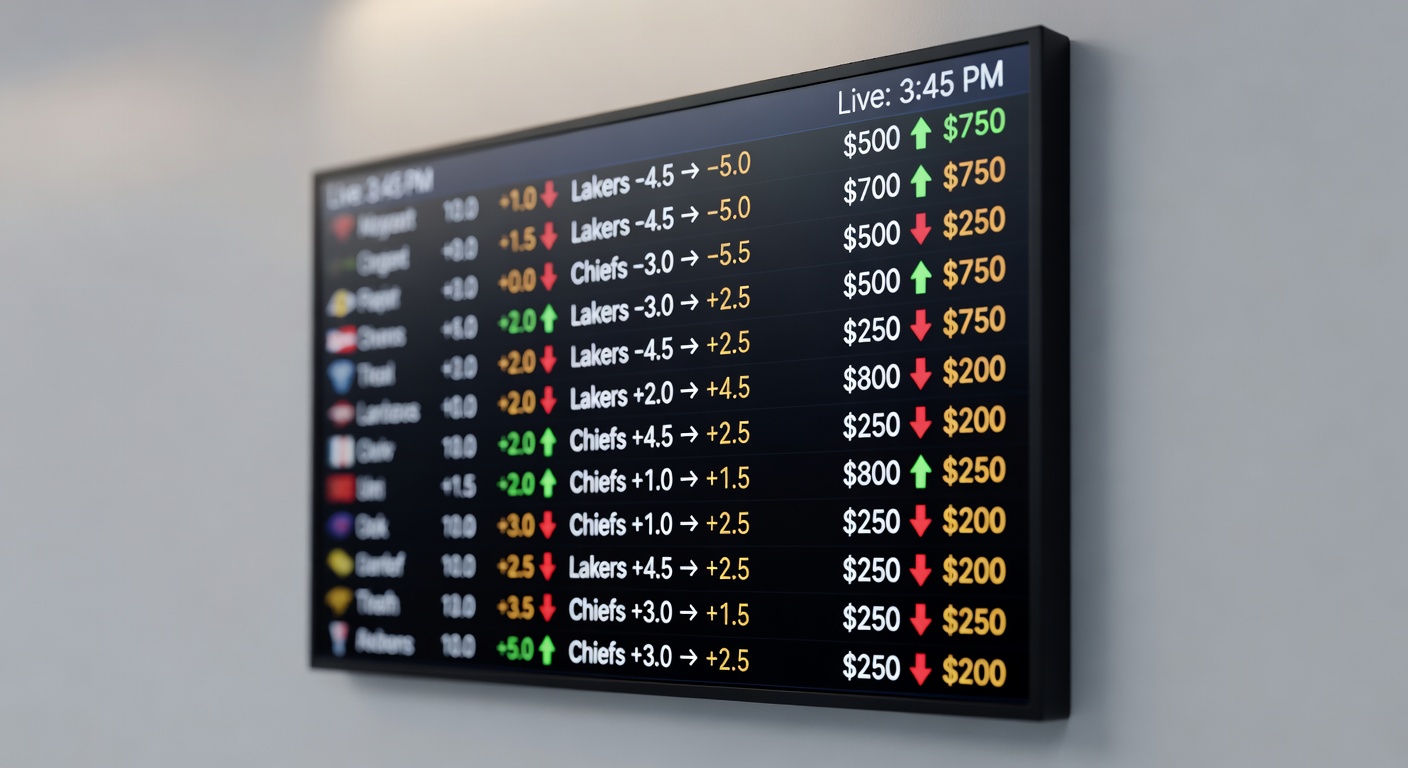
He switched to what he called "closing-line value" hunting. Simple: he would only place bets on lines that he believed were mispriced relative to the line's final closing number before the game started.
Example. He likes Cincinnati over New England at -2.5. He checks the final closing line three hours before kickoff. It's at -1. He doesn't bet. The market has moved four points against him. That's not a sign his read was bad; it's a sign the market disagreed when given eight hours to adjudicate.
The other direction: he likes Buffalo at +8. He checks closing, it's at +7. The market has only moved one point toward Buffalo. He bets. He's getting better odds than the market's final consensus.
Over one year, this filter alone improved him from -2.3% ROI to +1.7% ROI. Not spectacular. But it's the difference between bleeding money and printing it.
The Overlooked Detail
What makes Danny's story stick with me is that he didn't need better information. He had information. What he needed was humility about lag time.
Professional bettors understand something casual bettors don't: speed isn't your edge against the market. Efficiency is. The market moves because it's efficient. You beat it by either (a) finding something the market hasn't yet accounted for, which is nearly impossible for mainstream sports with mainstream betting, or (b) betting when the market is still wrong, not when it's solved the problem already.
Danny had been doing (b) in reverse. He was betting after the market had mostly solved it.
Switch your bets to closing-line value. Stop thinking of yourself as smarter than the numbers. You probably aren't. Instead, think of yourself as a timing mechanism: you're looking for the moment the market is still uncertain about what it will become certain about later.
The market is lazy. It moves like water. Find where the water hasn't flowed yet.
That's what Danny finally understood. And it's why his Sunday nights at McGinty's changed from quiet regrets to something else. Small gains. Earned gains. The kind that stick.