
Why Most Sports Bettors Lose and How to Be Different
A veteran bettor tells the story of Danny, who lost his house chasing longshots, and what his failure teaches us about the psychology of sports betting.
Words by Buddy Grant3 min read
I was sitting at O'Malley's on a Thursday night when Danny walked in. He'd been coming to the same bar for seven years, always with a racing form, always with a story about the one that got away. That night he told me about the time he parlayed six legs and lost it all on a fumble in the fourth quarter of the last game. He wasn't angry. He was explaining it to me like it was inevitable, the way you might explain how a bridge collapses.
Danny had everything wrong and nothing wrong at the same time. His systems were nonsense, sure. His bankroll management was a joke. He'd chase losses until three in the morning, betting into the worst lines of the day just to feel like he was still in the game. But here's what was really wrong with Danny: he believed that discipline was something you could switch on the moment you walked through a sportsbook door. He thought his intelligence, his memory for stats, his ability to spot a value line would carry him. What he didn't understand was that the house doesn't win because the math is bad. The house wins because most bettors are broken somewhere that discipline can't fix.
The Lie We Tell Ourselves
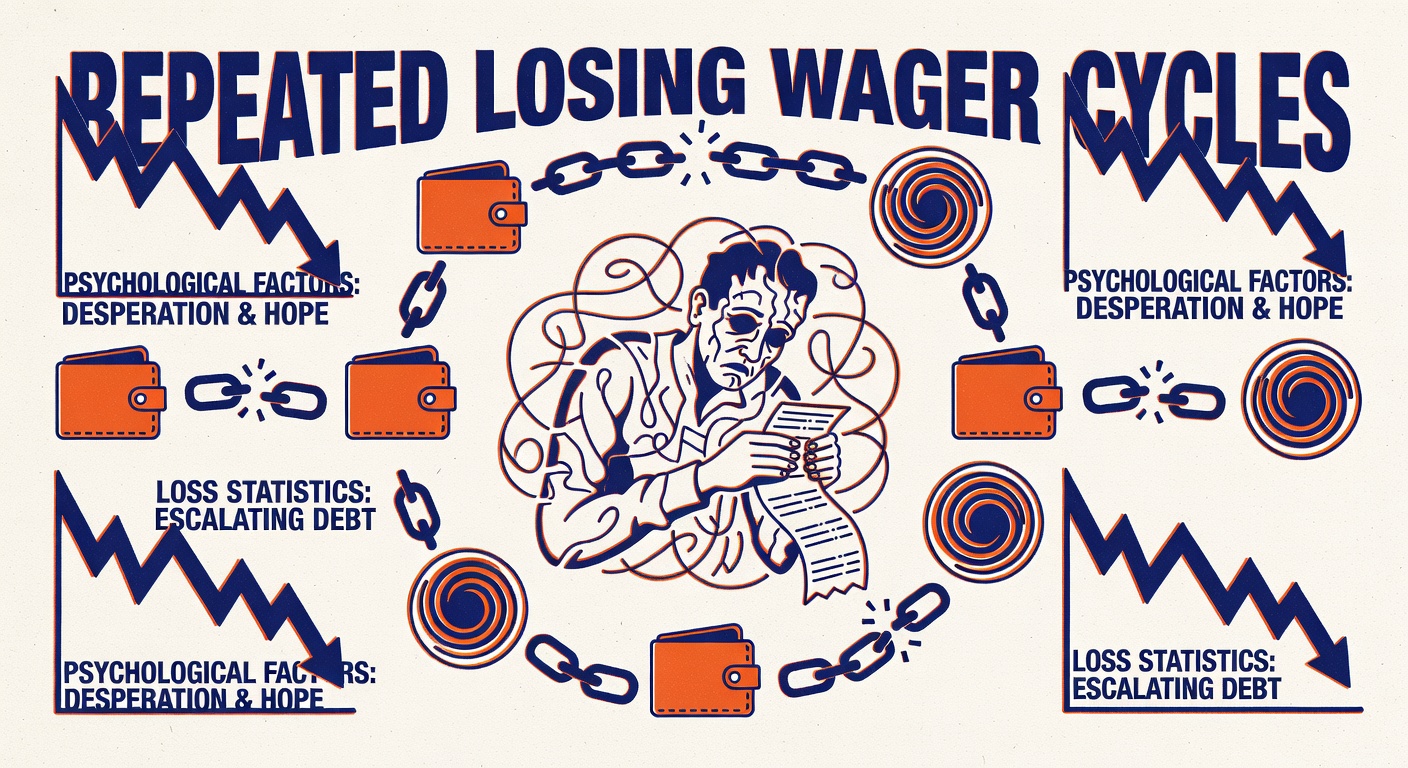
I've watched maybe a thousand Danny types walk up to a window and put down money they couldn't afford to lose. They all have the same origin story: they know sports, they've spotted a pattern everyone else missed, they're different from the other guys. That's the story, anyway. What's actually happening is simpler and meaner. They're experiencing what psychologists call the near-miss effect. They've won twice, maybe three times in a row, and their brain is flooded with reward chemicals that are literally designed to make them bet again.
The smart ones know the math. Expected value, closing line value, the juice. But knowing the math and having the stomach to sit out 40 games waiting for one where your edge is actually there, those are two different things. I knew a guy, Phil, who could calculate implied odds in his head. Brilliant. But he couldn't turn down a -110 bet on his team even when he knew it was a loser. He'd rationalize it to himself every single time. "This one's different." It never was.
Most bettors lose because they confuse confidence with edge. They lost money on Sunday, so they need to win it back on Monday night. That's not strategy, that's desperation wearing a thinking cap. Or they've had three winners in a row and suddenly they think they've figured out the game. Variance is a patient teacher, but it's also invisible until it isn't.
What separates the winners is not some secret knowledge about football or basketball.
What Danny Missed
Danny's mistake wasn't that he was greedy. Greed is normal and easy to fix. His mistake was that he never sat down and asked himself a harder question: why do I think I'm going to beat the professionals who've been doing this for decades? Not in a self-help way, but honestly. What edge do I actually have? Do I have access to information that's not already baked into the line? Am I faster at processing that information? Am I less emotional? Do I have a system that someone hasn't already tried?
Most of the time the answer is no. And that's not because most people are stupid. It's because the sportsbooks have a built-in edge on every single bet. You're not just competing against other bettors. You're competing against a math problem that's been solved thousands of times. The line is set by people whose full-time job is to find the exact point where half the money comes in on each side, and they do it very well.
What separates the winners is not some secret knowledge about football or basketball. It's discipline about when to bet and when not to bet. It's the ability to walk past ten bad lines to find one where you actually have an advantage. It's the willingness to bet small, track everything, and accept that you might go six weeks without a losing streak that proves your whole system is wrong. Most people don't have that in them. They want the action, the story, the feeling that they're smarter than the people around them.
Danny never came back to that bar. I heard he moved to Reno. I hope he found whatever he was looking for. But I suspect he's still at some sportsbook somewhere, telling himself he's different, that he's figured it out, that his next bet is the one that changes everything. That's the story every bettor who loses tells themselves, right up until the moment they can't anymore.